SYS.GUIDES
What Is an MCP Server? Model Context Protocol
What is an MCP server? Learn how Model Context Protocol hosts, clients, tools, resources, prompts, local servers, remote servers, and permissions work.
ON THIS PAGE
An MCP server is a program that gives an AI application a standard way to discover and use external tools, data, and reusable prompts. MCP stands for Model Context Protocol. Instead of building a custom integration for every AI client, a developer can expose one MCP interface that compatible hosts understand.
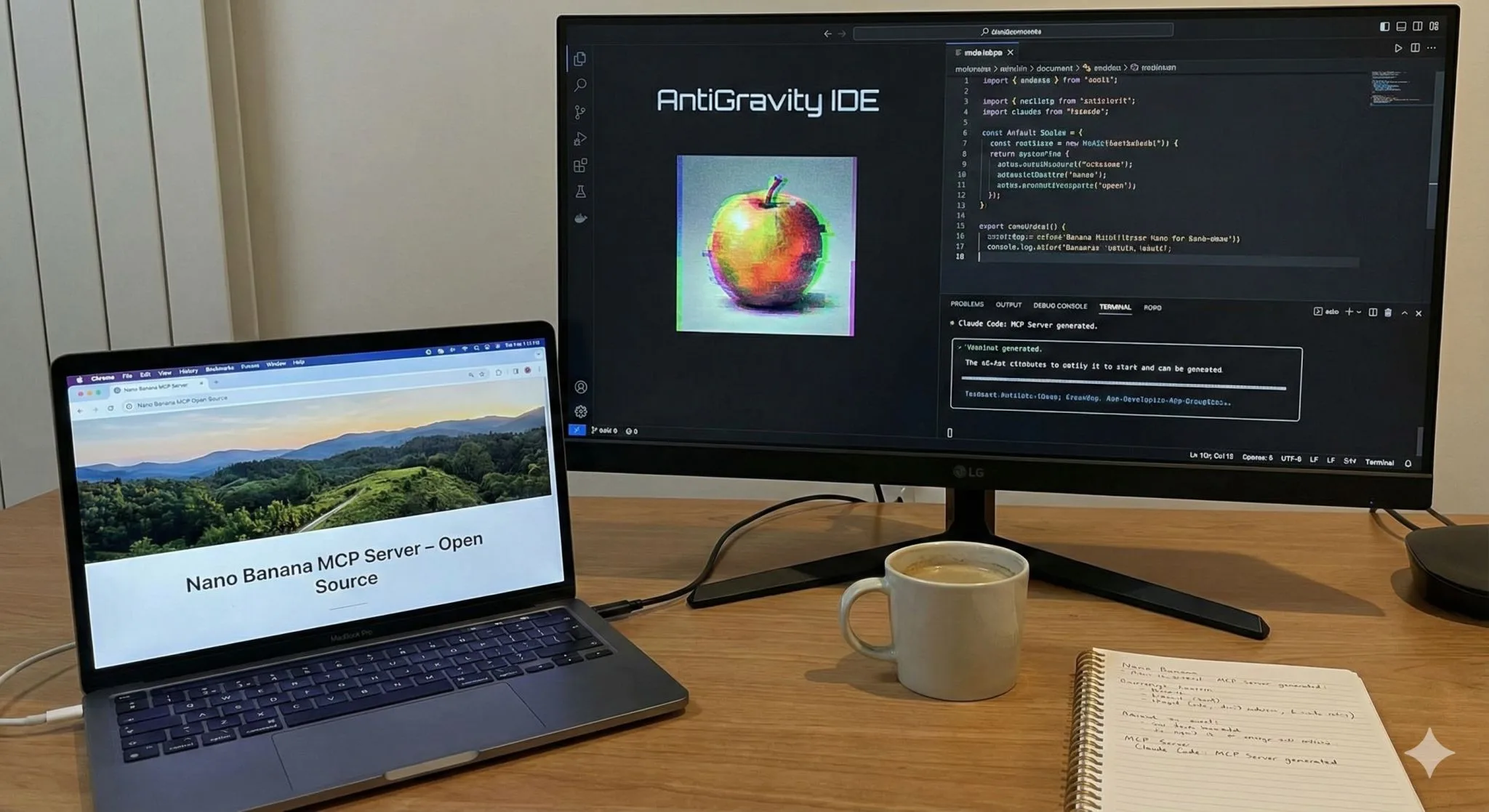
I use MCP servers to let Claude generate images, analyze YouTube videos, and manage project data. This guide explains the protocol without hiding behind the usual USB analogy: what the host, client, and server actually do, how local and remote servers differ, where APIs still fit, and which permissions deserve scrutiny.
What Is an MCP Server?
An MCP server is a local or remote program that exposes capabilities to AI applications through the Model Context Protocol. Those capabilities are organized as tools, resources, and prompts, which the client can discover instead of relying on hard-coded integration logic.
A filesystem server might expose a tool that writes a file, a resource that returns file contents, and a prompt for reviewing a repository. A calendar server might expose tools to find open time and create an event. The AI host still decides how these capabilities enter the conversation and should ask for approval before sensitive actions.
The official MCP server concepts documentation defines the same three building blocks and their control model. MCP standardizes the connection; it does not make every server trustworthy or every tool safe to run.
How MCP Works
MCP works by placing a protocol client inside the AI host and connecting that client to a server. The two sides negotiate capabilities, the client discovers what the server exposes, and the host routes approved requests and results between the model and server.
You
  -> AI host (Claude, ChatGPT, VS Code)
      -> MCP client
          -> MCP server
              -> files, APIs, databases, or services
MCP's data layer uses JSON-RPC 2.0 messages. Its transport layer carries those messages through standard input and output for local processes or Streamable HTTP for remote connections. The protocol also defines discovery methods such as tools/list and execution methods such as tools/call.
Host, Client, and Server
The host is the application you use, the client is its protocol connection, and the server is the program providing capabilities. Keeping those names separate makes MCP architecture much easier to reason about.
- Host: Claude Code, ChatGPT, VS Code, or another AI application that manages the model, permissions, and user interface.
- Client: the host's protocol component. A host normally creates one client connection for each MCP server.
- Server: a program that provides context or actions. It can run on your computer or on a remote service.
The official MCP architecture overview covers the message flow, capability negotiation, data layer, and transports in more detail.
Tools, Resources, and Prompts
MCP servers expose three core primitives: tools for actions, resources for context, and prompts for reusable workflows. They differ in both purpose and who controls when they are used.
| Primitive | What it provides | Typical control | Example |
|---|---|---|---|
| Tools | Functions that perform work | Model requests the call | Create a calendar event |
| Resources | Data supplied as context | Application selects it | Read a database schema |
| Prompts | Reusable instruction templates | User invokes them | Run a review workflow |
Tools get most of the attention because they let an agent act, but a server can implement any subset of the three. Use the online MCP Inspector to see the exact tools, resources, prompts, and input schemas a remote server advertises.
Is an MCP Server a Real Server?
Yes, but an MCP server is a program, not necessarily an internet-hosted machine. Local servers usually run as child processes over standard input and output, while remote servers expose an HTTP endpoint that many clients can reach.
- Local server: runs on the same computer as the host. It is useful for filesystem access, local developer tools, and credentials that should stay on the machine.
- Remote server: runs on the internet over Streamable HTTP. It is useful for shared services, browser-based clients, and integrations that need centralized authentication.
Remote does not automatically mean safer, and local does not automatically mean private. A local server can still send data to an outside API, while a well-designed remote server can enforce OAuth, narrow scopes, and audit logs. Read the server code or documentation and inspect its permissions before connecting it.
MCP Server vs API
An API is a service-specific interface; an MCP server is an AI-oriented adapter with standardized discovery and invocation. MCP usually sits on top of APIs rather than replacing them.
If a calendar product exposes a REST API, every AI application could build its own calendar integration and translate the API schema into model tools. An MCP server performs that translation once. Compatible hosts can discover its tools and schemas through the same protocol, even though the server still calls the calendar API underneath.
| Question | API | MCP server |
|---|---|---|
| Who consumes it? | Any programmed client | MCP-compatible AI hosts |
| How are capabilities found? | Product-specific documentation | Protocol discovery methods |
| Does it contain business logic? | Often | Usually wraps APIs or local code |
Why Would I Need an MCP Server?
You need an MCP server when an AI application must reach a capability it does not ship with. The strongest use cases combine proprietary context with controlled actions, such as reading project data and then updating an approved task.
- Give a coding agent access to an internal documentation system.
- Let an assistant query a database without exposing raw credentials.
- Connect one integration to several compatible AI hosts.
- Expose a narrow, validated action instead of arbitrary API access.
- Keep a local tool on the machine while making it discoverable to AI.
You do not need MCP when a normal library call inside your own application is simpler, or when only one hard-coded workflow will ever use the integration. MCP earns its complexity when discovery, portability, permissions, or reuse across hosts matter.
Real MCP Server Examples
Real MCP servers range from small local adapters to hosted products. The best way to understand the protocol is to inspect one focused server and follow a tool call from schema to result.
- My open-source image generation MCP server exposes Gemini image creation and editing to Claude and other hosts.
- The YouTube Analysis MCP Server gives agents summaries, Q&A, transcripts, search, and frame capture for public videos.
- AGINEAR exposes markdown project tasks to coding agents through a CLI, web interface, and MCP server.
- The official MCP example server collection includes filesystem, Git, memory, fetch, time, and test servers.
MCP is also how Claude can gain capabilities it lacks natively. My guide to making Claude generate images shows the protocol from the user side rather than the server implementation side.
Does ChatGPT Use MCP?
Yes. ChatGPT supports MCP-powered apps and connectors, while Claude, Claude Code, VS Code, Cursor, and other AI tools also support MCP. Exact features, plan access, and approval controls differ by host.
OpenAI's current ChatGPT developer mode documentation describes full MCP support, including write actions, as a beta rollout for Business, Enterprise, and Edu. Treat host support as a product capability that can change, not a guarantee that every client supports every protocol feature.
On Claude Code, install and authenticate the client first with the Claude Code setup guide. The complete Claude Code guide then covers how MCP fits into a larger coding workflow.
Are MCP Servers Safe?
MCP servers are safe only when their code, credentials, scopes, and approval flow are safe. A server can read sensitive data or perform destructive actions, so installing one deserves the same review as installing any other executable integration.
- Use servers from vendors or maintainers you trust.
- Read the exact local command and arguments before approving it.
- Grant only the files, accounts, and tool scopes the task needs.
- Keep secrets out of source control and logs.
- Use HTTPS and OAuth for remote servers that handle user data.
- Require confirmation before writes, purchases, sends, or deletes.
The official MCP security best practices explicitly require clear consent before one-click local configuration executes a command. The authorization guide recommends OAuth 2.1 patterns for remote servers protecting sensitive operations.
How to Try an MCP Server
Start with a server whose behavior you can inspect, list its capabilities, and call one read-only tool before granting write access. This gives you a concrete mental model without trusting a large integration on the first run.
Paste a publicly reachable Streamable HTTP server into the free online MCP Inspector to list its tools, resources, and prompts without installing npm packages. The inspector can also call tools with test arguments and show the raw result. Local stdio servers need a local client because a web service cannot reach a process on your machine.
Once the pieces make sense, follow the YouTube MCP setup guide for a complete working example, or read how the current MCP specification changes server implementations if you are maintaining protocol code.
FREQUENTLY ASKED QUESTIONS
What is the difference between an API and an MCP server?
An API defines how software calls a specific service. An MCP server wraps one or more capabilities in a standard interface AI clients can discover and use. MCP often calls existing APIs underneath; it does not replace them.
Why would I need an MCP server?
You need an MCP server when an AI assistant must use a tool or data source it cannot access on its own. One server can let Claude, ChatGPT, VS Code, or another compatible host query a database, read files, call an API, or perform an approved action.
Does ChatGPT use MCP?
Yes. ChatGPT supports MCP-powered apps and connectors, although availability and permissions vary by plan and workspace. OpenAI currently describes full MCP support, including write actions, as a beta rollout for Business, Enterprise, and Edu.
Is an MCP server a real server?
Yes, but server means a program, not necessarily a remote machine. A local MCP server can run as a child process on your computer over standard input and output, while a remote MCP server runs on the internet and usually communicates over Streamable HTTP.
Are MCP servers safe?
MCP servers are only as safe as the code, permissions, and credentials behind them. Install servers from trusted sources, inspect the exact command and requested access, grant the least privilege possible, and require approval for sensitive actions.