SYS.BLOG
Demoing Dream Pixel Forge at Seattle Tech Week
Video of my Dream Pixel Forge demo at Atlassian Demo Night: agentic image generation, making Claude generate images via MCP, and catching bad hands with Gemini.
Claude cannot generate images. I got up in front of a room at Atlassian's Demo Night during Seattle Tech Week 2026 and had it generate an entire marketing site anyway, from one prompt, with the artwork made on the fly. That is the whole pitch for Dream Pixel Forge, and the nine minutes below are me making it in public with a live agent that did not always cooperate.
Stop prompting, start directing
Dream Pixel Forge is agentic image generation: you state intent and agents write the prompts. You do not sit there tuning a paragraph of adjectives and negative prompts until the composition stops falling apart. You say “let's make some more ninja stickers” and an agent looks at what is already on your board, infers the style, plans a set, generates them, and checks its own work.
The line I opened the talk with is the one I actually believe: who wants to sit around writing prompts all day? That would be like sitting around writing code. Nobody hand-writes every line anymore, and I do not think prompt engineering for images survives either. The interesting skill is taste, not phrasing.
This started as my own unpaid job
I built it because I was already doing this work by hand, badly, several hours a week. I run Rifle Configurator, a firearm builder (the site I vibe coded to 1 million+ visitors) that needs high-resolution product shots of things that are sometimes not in any image model's training data. I also run an Etsy store selling stickers, which means designs, mockups, listing photos, and marketing images, on repeat, forever.
So the flows already existed in my head. The product is those flows, automated and handed to somebody else. That is also why it is opinionated about jobs instead of being another prompt box: a sticker needs a transparent background and a print-ready edge, a product shot needs the real product passed in as a reference, and a poster needs a different aspect ratio than either.
Can Claude generate images?
Not on its own. Claude has no native image generation model, so out of the box it will describe an image to you and stop there. Add an MCP server that exposes image generation as a tool and Claude can generate images, because the model is calling out to something that can. MCP, the Model Context Protocol, is the standard way to hand an AI assistant new tools it did not ship with. I wrote a full guide on whether Claude can generate images that covers the setup, the free route, and how it compares to ChatGPT and Gemini.
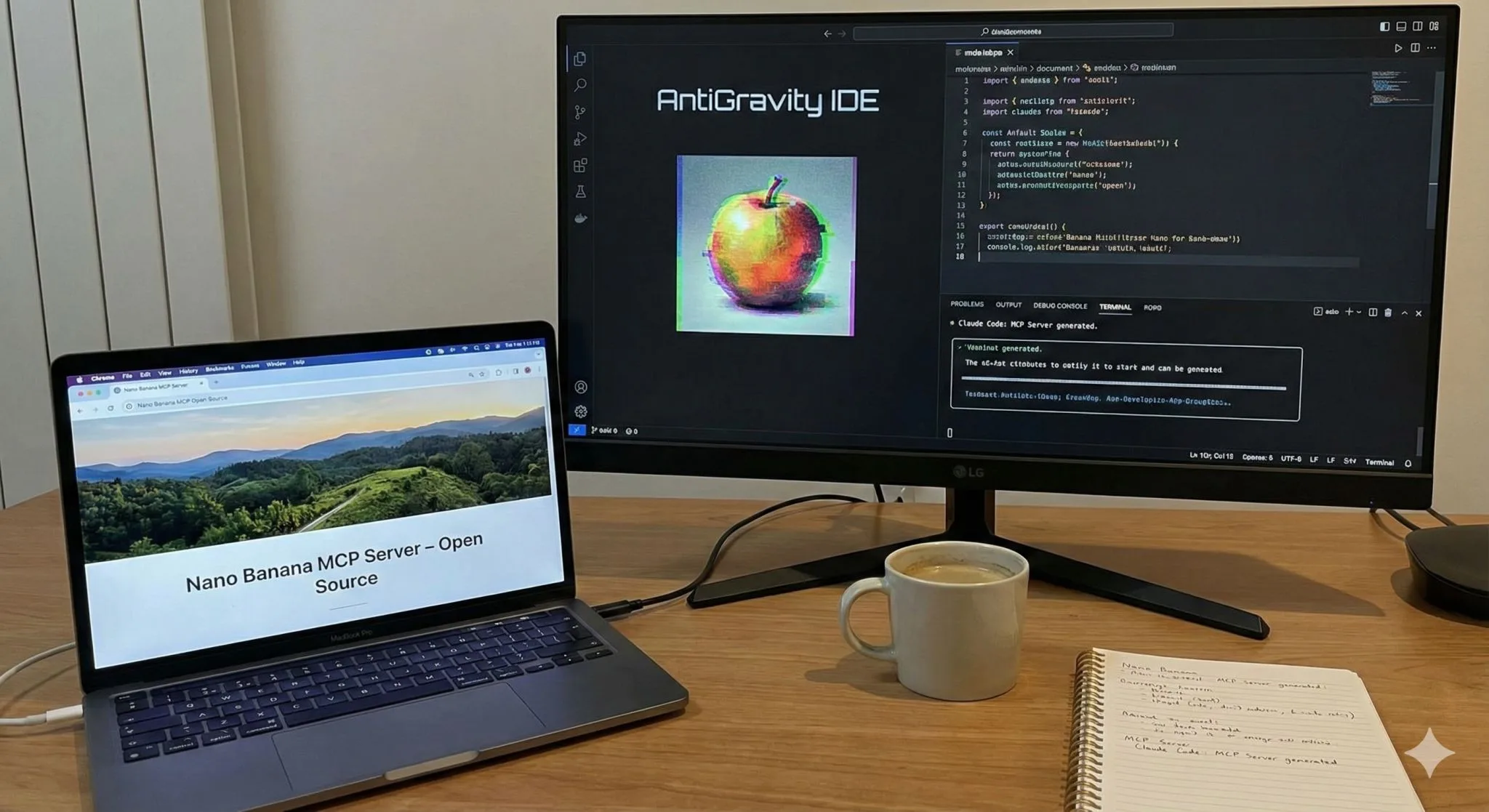
The marketing site in the demo was built that way in the Claude desktop app. One prompt: make this marketing campaign. Claude used the Dream Pixel Forge MCP server for the imagery and its own built-in tools to write the HTML. I did not write a single image prompt. Claude wrote all of them, and a few needed regenerating, which I said on stage because it is true.
This is the same pattern as the standalone image generation MCP server I open sourced earlier, and I wrote up how that one was put together if you want the implementation details. Our MCP server ships with its own prompts so Claude knows how to use the tools without instruction, and the CLI ships with a skill so coding agents can drive it the same way.
The six-finger problem
Every generated image goes through a vision-model review before it is called done, and it regenerates if it fails. If you have used AI image generation you have seen the hand with six fingers. That result is not just funny, it is commercially fatal: a visitor sees one mangled hand on your storefront and decides the whole site is slop.
We use Gemini for validation, not Claude. Claude can technically read images but it is genuinely bad at it, in the sense that it does not reliably understand what is happening in the frame. Google has enormous amounts of multimodal training data and it shows. Picking the right model per job also applies to generation, where we route between Gemini and GPT Image based on cost and their different strengths. If you are wiring these up yourself, the exact model slugs are in my AI model API ID reference.
What actually happened on stage
The agent took long enough to think that I ran out of slides. That is the honest version. I kicked off a sticker generation on the studio board, the agent went off to inspect the existing images, and then there was dead air in front of a room full of people, so I took an audience question about the token model while it worked.
It came back and did the thing: prompts set up, four stickers generated in the established style, background removal ready for print-on-demand upload, then validation, then finalization. Four stickers ready for review, matching your existing style. Slower than a demo should be, and exactly what it is supposed to do.
What the room asked
The questions were sharper than I expected and mostly technical. Are you training your own image models? No, and we cannot afford to. We use the existing frontier models with smart routing. Can you control aspect ratio? Yes, though you are picking from preset ratios rather than arbitrary ones, because that is what the underlying model APIs take.
The best one was about my claim that some products are not in the training data: how do you know before you generate whether a model can even make the thing? The answer is that you do not rely on it. If I need a specific product, I pass that product in as a reference image so the generator reproduces it exactly instead of reconstructing it from a vague memory. That single habit is the difference between usable product photography and something that looks almost right.
The part I am still chewing on
The feedback loop is the piece I think matters most and the piece I explained worst on stage. Curating taste trains your agent: the images you approve and reject become preference data, so the tool gets more specifically yours over time rather than more generically good. That is a moat you cannot get from a better base model.
The open question is how much of that transfers. If the agent learns my sticker aesthetic, does any of it help when I switch to poster mockups, or does every new job start cold? I do not have a clean answer yet. If you want to try it and tell me, it is live at dreampixelforge.com, and the history of the local Stable Diffusion GUI it grew out of is worth a read if you want to see how far the idea moved.
FREQUENTLY ASKED QUESTIONS
Can Claude generate images?
Not on its own. Claude has no native image generation model, so it can describe an image but not produce one. Connecting an MCP server that exposes image generation as a tool lets Claude create images by calling out to a model that can, which is how the marketing site in this demo was built from a single prompt.
Why can't Claude generate images natively?
Anthropic builds Claude as a text and vision model, not an image generation model, so there is no diffusion or image model behind it to call. Claude can read images reasonably well and write the prompts for one, but producing pixels requires a separate model reached through a tool or an MCP server.
What is agentic image generation?
Agentic image generation means you state what you want and an agent handles the prompting, generation, and quality checking. Instead of hand-tuning prompt text, you give direction like "make more stickers in this style" and the agent inspects existing work, plans a set, generates it, and regenerates anything that fails review.
How does Dream Pixel Forge check image quality?
Every generated image is reviewed by Gemini before it is marked done, and failures are regenerated automatically. Gemini is used rather than Claude because Google's multimodal training gives it a far better read on what is actually happening in a frame, which matters for catching artifacts like six-fingered hands.