SYS.BLOG
ESP8266-Powered LED Matrix Clock
Building an NTP-synced LED matrix clock using an ESP8266, a 3V–5V logic level shifter, and a MAX7219 LED matrix module.
 Download the code here: https://github.com/Legorobotdude/esp8266-LED-matrix-clock
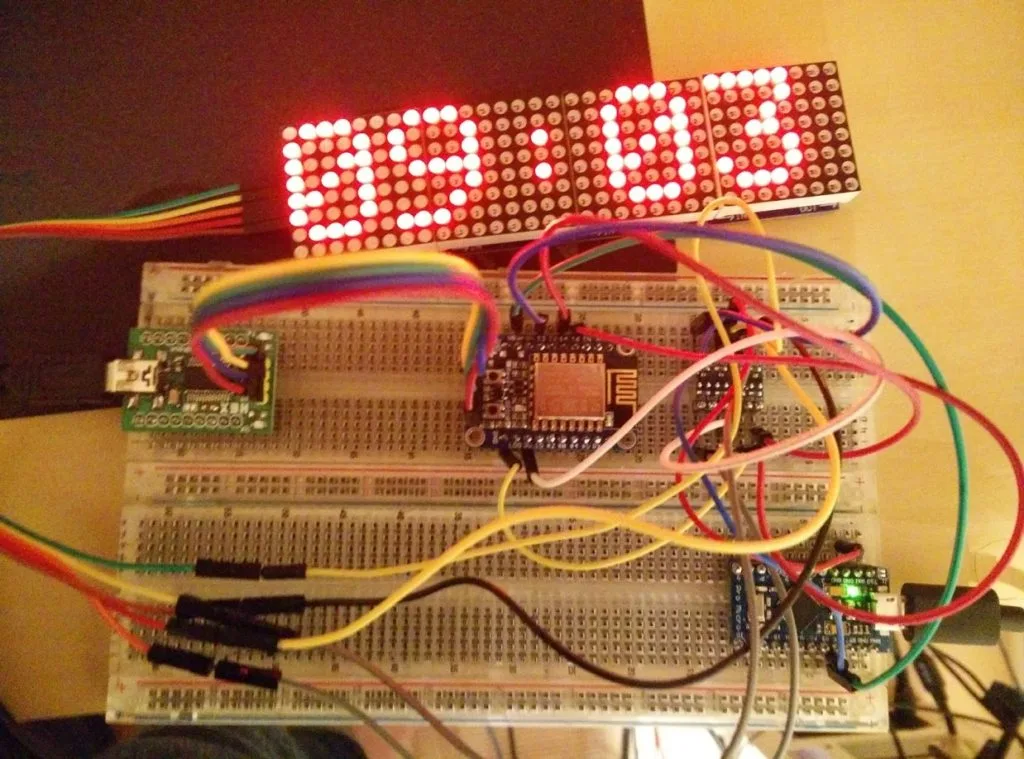
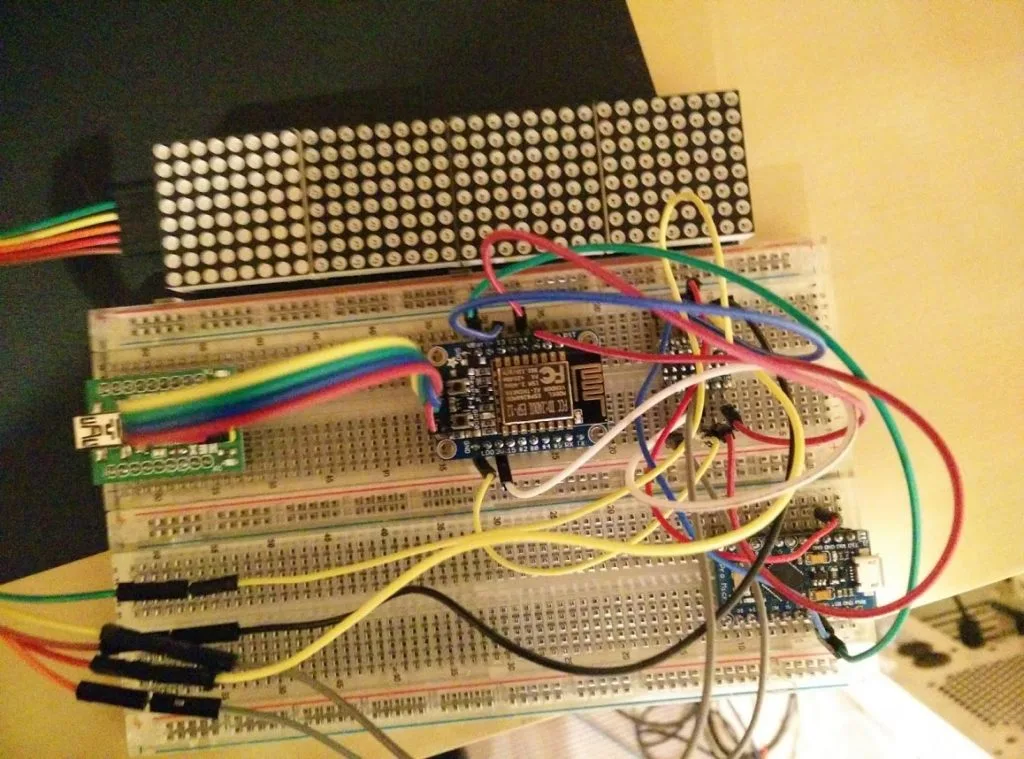
The circuit consists of an ESP8266 as the brains and wifi connectivity, a 3v-5v logic level shifter in order to interface with the 5V led matrix, and the matrix itself. Additional debug circuitry in the picture includes a USB Serial Converter, and an Arduino Micro to supply power.
Download the code here: https://github.com/Legorobotdude/esp8266-LED-matrix-clock
The circuit consists of an ESP8266 as the brains and wifi connectivity, a 3v-5v logic level shifter in order to interface with the 5V led matrix, and the matrix itself. Additional debug circuitry in the picture includes a USB Serial Converter, and an Arduino Micro to supply power.FREQUENTLY ASKED QUESTIONS
Does the ESP8266 have a real-time clock?
The ESP8266 does not have a built-in RTC, but it can sync time via NTP over WiFi. For offline timekeeping, you can add an external RTC module like the DS3231, which communicates over I2C and provides temperature-compensated accuracy.
Can the ESP8266 connect to WiFi automatically?
Yes, the ESP8266 can connect to any available WiFi network using its built-in 802.11 b/g/n support. You can also configure it as an access point for initial setup, then switch to station mode for normal operation.
Is ESP32 better than ESP8266 for clock projects?
ESP8266 is ideal for simple WiFi-only projects like NTP clocks due to its low cost. ESP32 offers Bluetooth, more GPIO pins, and better performance, but is overkill for a basic LED matrix clock.