SYS.BLOG
Claude Sonnet 4.5 Built a Cyberpunk Shooter
I pitted Claude Sonnet 4.5 against GPT-5 Codex High to build a game from scratch. Sonnet won on visuals and worked first try. Play Neon Streets: 2084 in the browser.
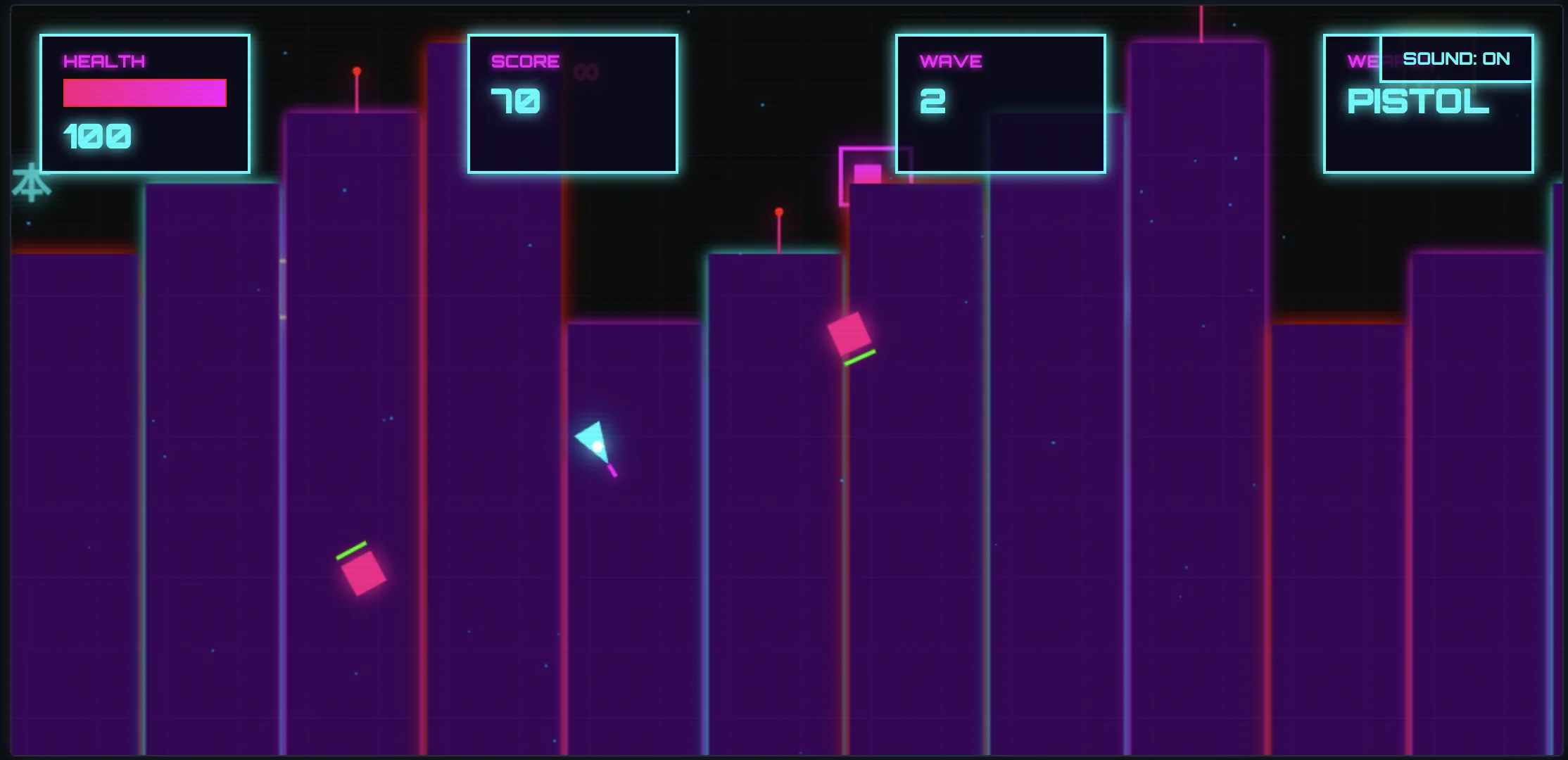
Claude Sonnet 4.5 just dropped, and my first real test was asking it to build a game from scratch. In 2–3 prompts it threw together a working cyberpunk bullet-hell shooter: power-ups, escalating enemy waves, boss fights, and visuals that genuinely impressed me. Play it below.
WASD to move, mouse to aim, click to shoot. Pick up weapon drops from enemies. Or play it full screen here.
Claude Sonnet 4.5 vs GPT-5 Codex High
I ran the same prompt through GPT-5 Codex High as a comparison. It produced a similar game (enemy waves, basic shooting mechanics), but the visuals weren't close, and it didn't work on the first try. Claude needed no debugging pass.
The gap that stood out most was the art direction. Sonnet 4.5 made deliberate visual choices: neon color palettes, particle effects, procedural audio that fits the cyberpunk aesthetic. GPT-5's output felt functional but flat by comparison.
For game jams, rapid prototyping, or anyone vibe coding a creative project, Sonnet 4.5 is noticeably better at translating a vague creative brief into something that actually looks good.
FREQUENTLY ASKED QUESTIONS
Can Claude be used for game development?
Yes. Claude AI has evolved from a conversational assistant into a capable development partner. Developers use it for coding, testing, design support, narrative generation, and gameplay simulation. With Claude Sonnet 4.5, you can build playable games in remarkably few prompts.
Is Claude AI good for development?
Claude Code excels at analyzing existing code, configuration, and documentation. It can generate diagrams, specifications, and full implementations. For game development specifically, it handles both the visual/UI code and game logic simultaneously.
Is it legal to make a game with AI?
Yes, you own games you create using AI tools. The legal nuance is around AI-generated assets (art, music) which may not be copyrightable in some jurisdictions. Code you direct an AI to write, with your creative input and oversight, is generally considered your work.