SYS.BLOG
Aphasia Coach: AI Speech Recovery App
After a family member's aphasia, I built an open-source AI speech therapy app. Personalized exercises, spaced repetition, and voice-first practice, free to use.
This one is more personal than most of my projects. A family member was recovering from surgery and dealing with mild aphasia, a condition that affects the ability to speak, understand, read, or write. Their speech therapist recommended daily practice, but the existing apps weren't working. They were too generic, using unfamiliar words and phrases that caused more frustration than progress, and not personalized enough to feel relevant.
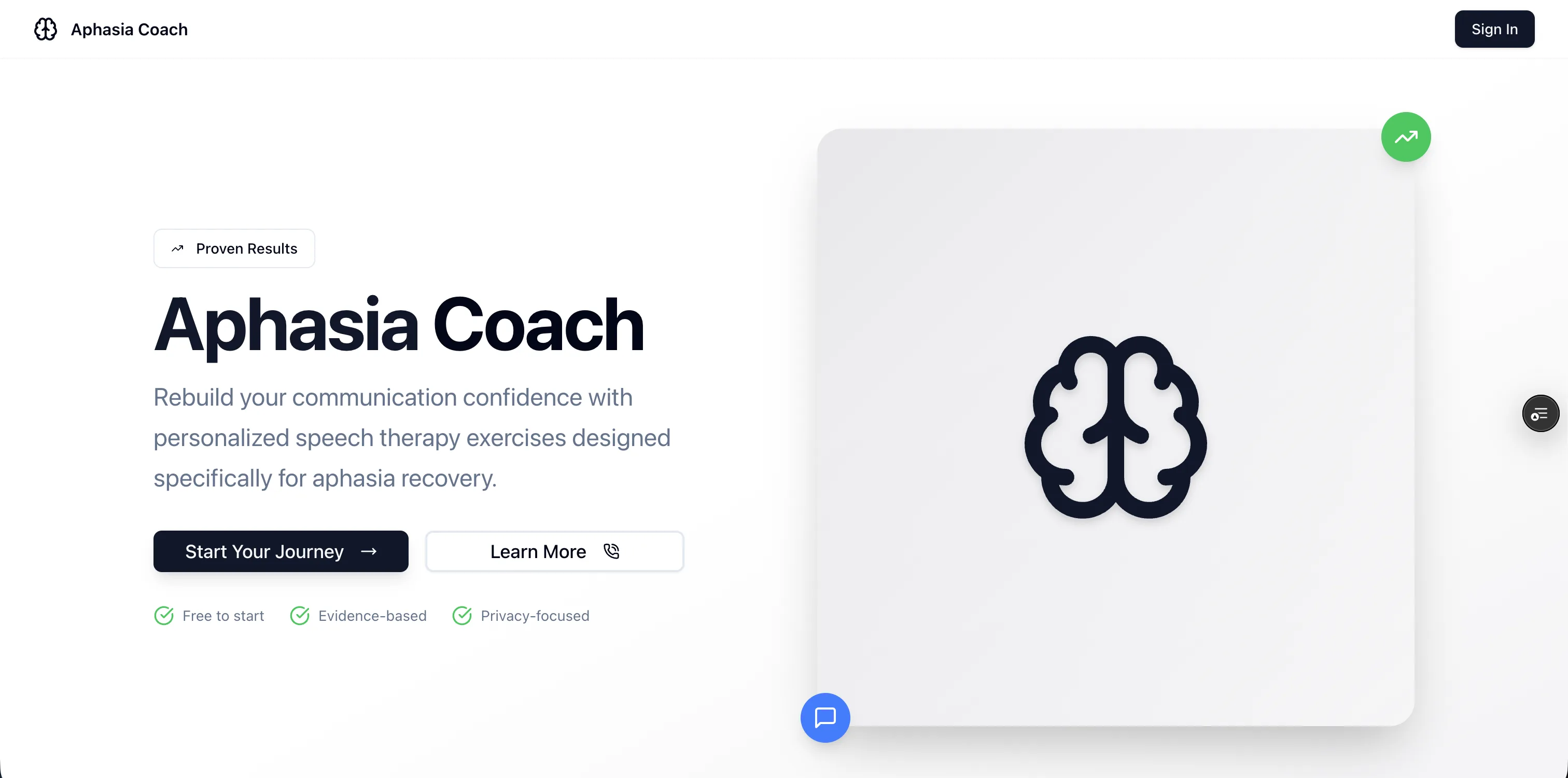
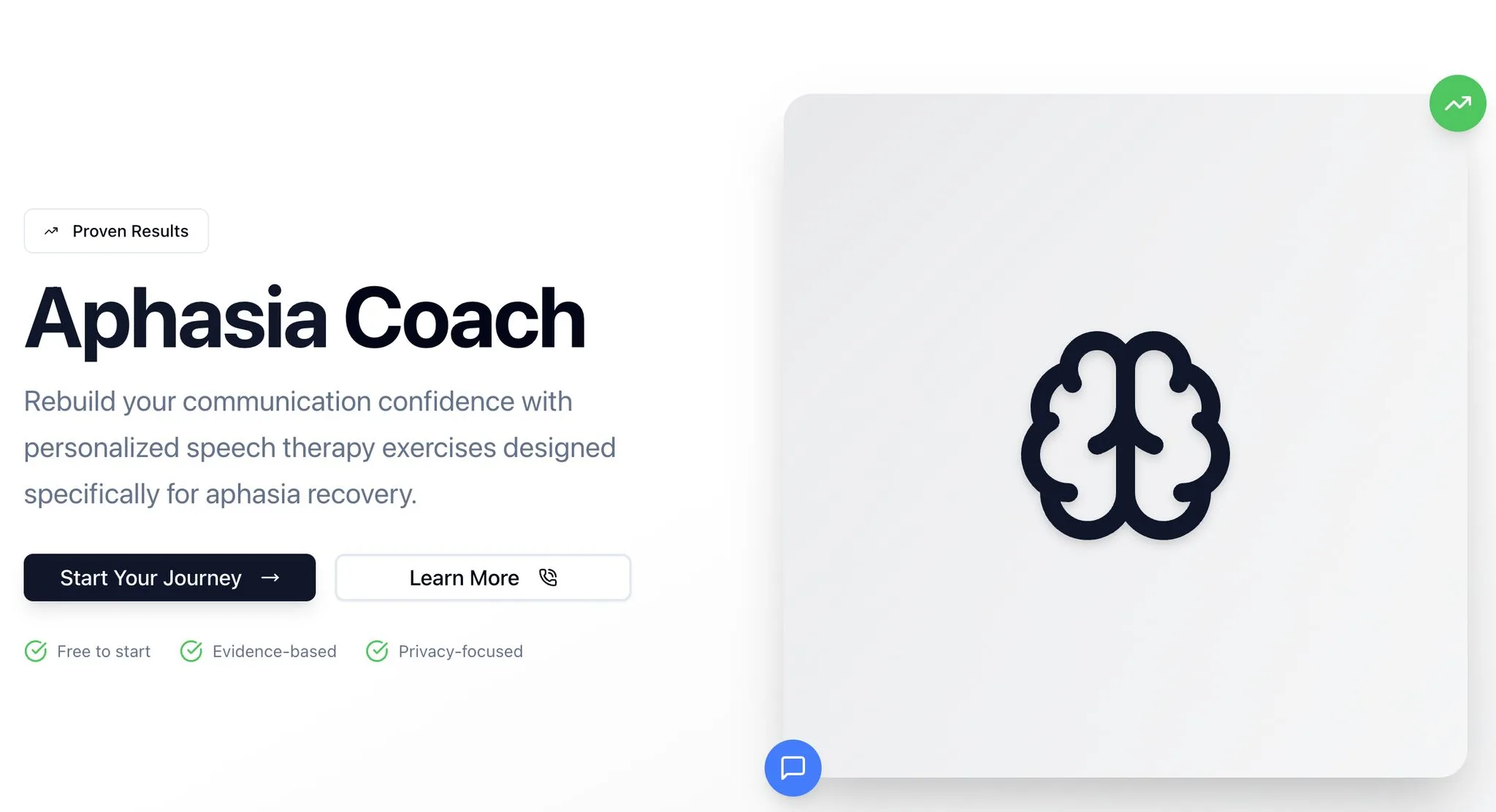
So I built Aphasia Coach.
What It Does
Aphasia Coach uses AI to personalize practice sessions to the individual: their vocabulary, their recovery stage, their aphasia type. Instead of drilling words they've never heard, users practice with language that's actually familiar to them.
- Personalized exercises: adapted to the user's vocabulary and recovery stage
- Spaced repetition: evidence-based scheduling to reinforce words at the right intervals
- Voice-first: TTS and STT keep practice verbal rather than text or click-based, which is closer to real communication
- Free to start: no paywalls to get going
Why Voice-First Matters
Most language apps are built around reading and typing. For someone with aphasia, that's the wrong modality: the goal is verbal communication, not spelling.
By centering practice on speech (speaking and listening), the exercises are more representative of real-world use and less frustrating for people who find visual/text tasks harder post-injury.
Open Source & What's Next
The code is open source. I wanted to make it easy for others to build on, whether that's new exercise types, support for other languages, or new modalities.
The next obvious direction is image generation for visual association practice, which could make exercises more effective for certain aphasia types.
If you or someone you know is dealing with aphasia, give it a try at aphasia-coach.vercel.app. Feedback is very welcome.
FREQUENTLY ASKED QUESTIONS
Is there a free speech therapy app?
Several free speech therapy apps exist, including TalkPath Therapy. For aphasia specifically, AI-powered apps can provide personalized practice sessions that adapt to individual recovery progress, offering more frequent practice than in-person therapy alone.
Can a person recover from aphasia?
Many people with aphasia show significant improvement, especially with consistent practice. Recovery varies based on the type and severity of aphasia, but regular speech exercises, including app-based therapy between clinic visits, can accelerate progress.
What are the four types of aphasia?
The four main types are Broca's (difficulty speaking but good comprehension), Wernicke's (fluent but confused speech), Global (severe impairment in all language areas), and Anomic (word-finding difficulties). AI speech therapy apps can adapt exercises to each type's specific challenges.